Sitewide Free Shipping!

How to adapt your pilates practice safely through every trimester — without starting from scratch

Introduction
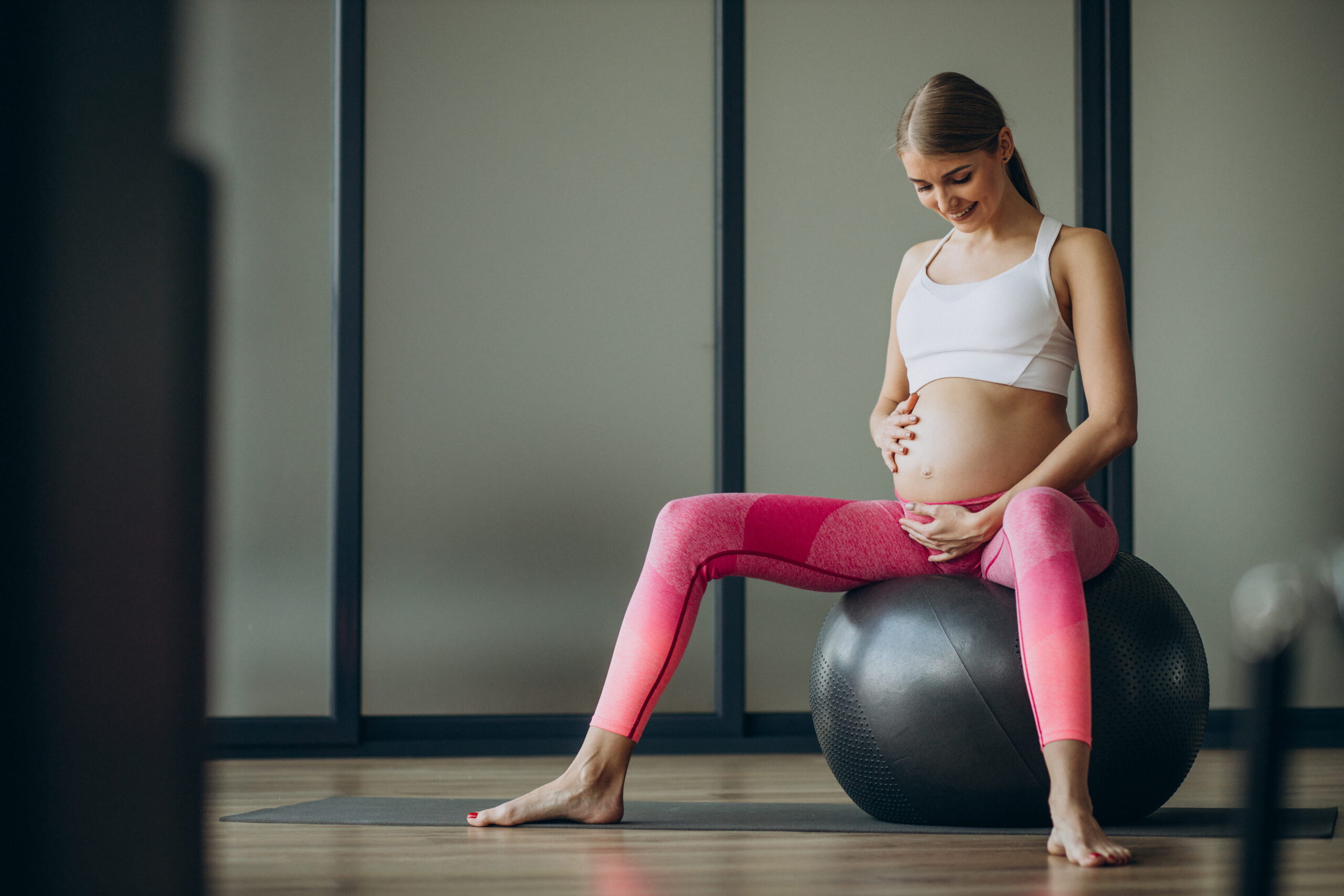
If you’ve been doing pilates for a while, you already have something most pregnancy fitness guides don’t assume: body awareness, breath control, and a relationship with your deep core that most beginners spend months trying to find. That’s genuinely good news. But it also means the standard “pregnancy pilates for beginners” content isn’t written for you — and following advice too cautious for your baseline can leave you under-trained, frustrated, and losing ground you don’t need to lose.
This guide walks you through exactly how to modify your existing practice by trimester — what stays, what adapts, and what to retire — so you can train smart, stay connected to your body, and recover faster postpartum.
Always confirm any new exercise plan with your midwife or OB, especially if you have any pregnancy complications.
What you’ll need
A mat, a pilates ring or resistance band, two small props (yoga block or firm cushion), and clearance from your healthcare provider. No reformer required — though if you have access to one, it remains safe into the third trimester with modifications.
The trimester-by-trimester guide
Step 1: Recalibrate your core connection in the first trimester
Your first trimester is less about restriction and more about recalibration. Fatigue and nausea may limit your sessions more than physical limitations will — honour that. The main shift: move away from aggressive loaded flexion (think: roll-ups, double-leg stretch with full extension) and begin retraining your breath-to-core connection with a growing uterus in mind. Lateral breathing becomes your new baseline. Transverse abdominis engagement — not a braced, sucked-in hollow — is the cue you want to be giving yourself and reinforcing.
Tip: Your proprioception is still sharp right now. Use this trimester to build a library of modified versions of your favourite exercises before your centre of gravity starts shifting noticeably.
Step 2: Restructure supine work by week 16
The supine hypotension guideline — avoiding flat-on-your-back positions — typically applies from around 16–20 weeks, when the uterus becomes heavy enough to compress the vena cava. You don’t have to cut supine work abruptly; instead, use a 30–45 degree incline (a bolster under your thoracic spine works well) or transition exercises to side-lying or seated equivalents. Single-leg stretch, leg circles, and hip work all translate cleanly. Bridging can stay flat longer than most guides suggest — it’s a dynamic movement, not a static hold.
Tip: Mark your reformer carriage position and spring settings now. You’ll want references to return to postpartum.
Step 3: Shift your second trimester focus to stability and length
Relaxin peaks in the second trimester, increasing joint laxity across the whole body — not just the pelvis. This means your usual end-range stretching carries more injury risk than it did pre-pregnancy. Prioritise control at mid-range rather than pushing into full range of motion. Side-lying series, seated footwork, and kneeling hip work all become workhorses here. This is also when pelvic girdle pain (PGP) can emerge — if you feel any asymmetrical loading or pubic discomfort, reduce single-leg weight-bearing work immediately and check in with a women’s health physio.
Tip: Keep your sessions shorter and more frequent — 30 minutes four times a week outperforms 60 minutes twice a week at this stage.
Step 4: Train for birth in the third trimester
The third trimester is not the time to maintain your pre-pregnancy performance level. It is the time to train for birth — which is actually a useful reframe that keeps active women engaged rather than feeling like they’re in a holding pattern. Focus on: glute and posterior chain strength (to support the added load), diaphragmatic breath coordination (directly relevant to pushing), pelvic floor lengthening alongside its strengthening, and hip mobility that will serve you in labour positions. Squats, hip hinges, clam series, and supported side-lying work are all appropriate at full term.
Tip: Practice diaphragmatic breathing in the positions you plan to use in labour — standing, all-fours, side-lying. This is exactly the kind of embodied preparation pilates uniquely supports.
Step 5: Monitor for doming and adjust loading in real time
Because you’re not a beginner, you’re capable of generating intra-abdominal pressure that can exceed what your linea alba should take on at a given stage of pregnancy. Check for coning or doming along your midline during any exertion. If you see it, it’s not an emergency — it’s information. Reduce the load, adjust the leverage, or change the movement entirely. This skill — reading your body and adjusting in real time — is already in your toolkit. Pregnancy just asks you to use it more consciously.
Common mistakes to avoid
Doing less than your body actually needs — Under-training is as real a risk as over-training in pregnancy, especially for experienced movers. Generic “pregnancy safe” content often defaults to the lowest common denominator. If an exercise feels manageable, controlled, and doesn’t produce doming, pressure, or discomfort — it’s probably fine.
Treating the pelvic floor as a single “squeeze and release” — Lengthening matters as much as strengthening. An over-recruited pelvic floor before birth can impede rather than support labour. A women’s health physio can assess this directly — one session is worth it.
Skipping breath cues when exercises feel familiar — The breath-load coordination you do automatically in normal training becomes non-negotiable in pregnancy. Holding your breath under load drives IAP spikes your body doesn’t need right now.
Conclusion
Your pilates background gives you a measurable advantage in pregnancy — and even more so in postpartum recovery. The goal through each trimester isn’t to stop practising; it’s to practise with more precision than you ever have. That’s not a downgrade. It’s a different kind of challenge, and honestly, a more interesting one.


 Dresses
 T-Shirts
 Tops
Tops Pants
Pants Skirts
 Shorts
 Lingerie
 Sweaters
 Sneakers
 Boots
Boots Canvas
 Heels
Heels Sandals
 Slippers


 Earrings
 Necklaces
 Bracelets
 Rings
Rings Wedding Rings
 Sunglasses
 Watches
 Wrist Watches
 Smartwatches